You wake up with a dull ache near your ear. Your jaw clicks every time you open your mouth. You have had recurring headaches for months and assumed it was stress. What you may not realise is that all three can trace back to a single source — the temporomandibular joint. If you have been searching for a TMJ doctor in Madurai, this guide will help you understand the condition, the symptoms to watch for, and what treatment looks like.
What Is the TMJ?
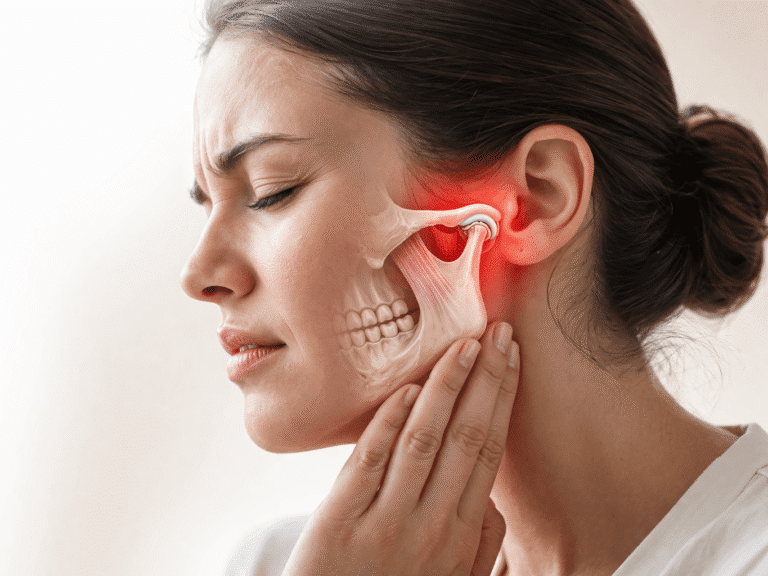
The temporomandibular joint is the hinge that connects your lower jaw to your skull, sitting just in front of each ear. It rotates, glides forward, and shifts sideways every time you chew, speak, or yawn — making it one of the hardest-working joints in the body. When something disrupts its normal function, the effects can be felt well beyond the jaw itself.
What Causes TMJ Problems?
TMJ disorders are rarely caused by a single factor. Common contributors include:
Teeth Grinding (Bruxism): Many people grind their teeth unconsciously during sleep, placing enormous stress on the joint over time without realising it.
Bite Misalignment: When upper and lower teeth do not meet properly, the jaw compensates with every bite — creating chronic strain on the TMJ and surrounding muscles.
Stress and Jaw Tension: Emotional stress often manifests as jaw clenching, which significantly increases the risk of developing TMJ symptoms over time.
Past Injury: A prior impact to the jaw — even years ago — can alter joint mechanics and produce symptoms long after the injury itself has healed.
Arthritis: Degenerative joint conditions can affect the TMJ just as they affect other joints, causing progressive stiffness and pain.
Symptoms to Watch For
TMJ disorders are often mistaken for ear infections, migraines, or general muscle tension. Common symptoms include:
- Pain or tenderness near the joint, just in front of the ear
- Clicking, popping, or grating sounds when opening or closing the mouth
- Difficulty opening the mouth fully or a jaw that occasionally locks
- Persistent headaches or neck pain without a clear cause
- Morning jaw soreness after waking
- A bite that feels different from how it used to
If any of these have persisted for more than a few weeks or are getting worse, it is time to see a specialist.
How Is TMJ Treated?
Treatment always begins with a thorough clinical assessment before anything is recommended. Common approaches include:
Night Guards: Custom-fitted splints worn during sleep to reduce grinding, relax jaw muscles, and protect the teeth from further wear.
Bite Correction: Orthodontic or restorative treatment to rebalance how the teeth meet and reduce long-term strain on the joint.
Jaw Exercises: Guided exercises to strengthen and relax the muscles surrounding the TMJ, often prescribed alongside other treatments.
Medication: Short-term anti-inflammatories or muscle relaxants for acute pain relief — always paired with treatment addressing the root cause.
Minimally Invasive Procedures: For cases unresponsive to conservative care, options such as joint injections may be considered by the treating specialist.
Do Not Ignore Jaw Pain
Jaw pain and clicking have a way of becoming background noise — something people manage around rather than treat. TMJ disorders that are left unchecked tend to progress, becoming harder to treat and beginning to affect sleep, eating, and daily concentration. A proper specialist assessment is always the right starting point.
Schedule Your Visit
If you are looking for a TMJ doctor in Madurai, Smile Style Dental Clinic offers specialist TMJ consultations led by Dr. Vigneshwar, who holds a dedicated Fellowship in Temporomandibular Joint management. Two branches in Madurai — Anna Nagar and Villapuram — open Monday to Saturday. Book a consultation at smilestyledental.com.